Sleep Architecture
Sleep operates in cycles of light, deep, and REM phases. Each phase serves distinct recovery functions from memory consolidation to physical restoration.
Understanding Energy Dynamics
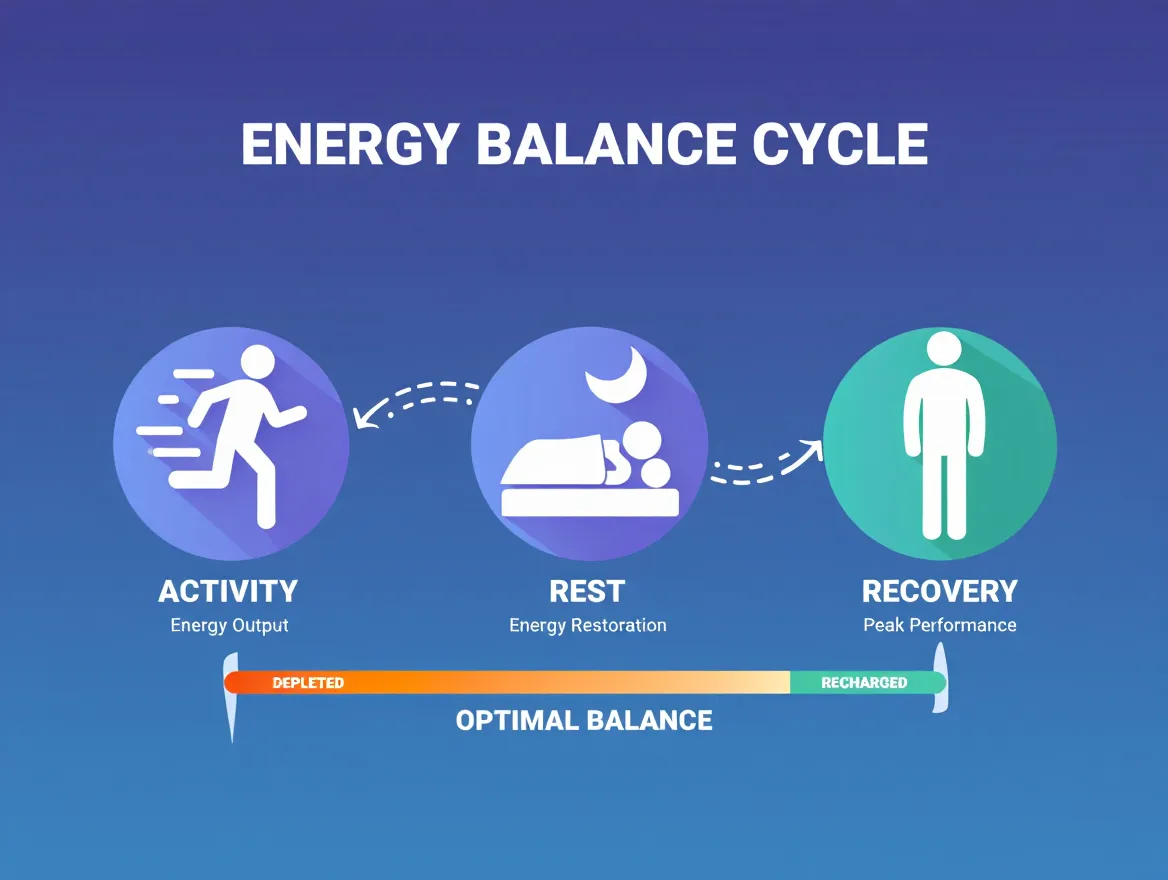
Daily energy is not unlimited. It operates within a cycle of expenditure and recovery. Understanding how rest functions within this cycle is the basis for maintaining consistent activity over time.
Figures on this page summarize common public-health and educational themes; they are not medical advice or guarantees for any individual.
Core Principle
When activity continues without adequate rest intervals, the body and mind enter a state of progressive depletion. Each subsequent effort yields less output despite equal or greater input. This is not a failure of willpower — it is a structural limitation of how energy systems operate.
Rest is not the absence of productivity. It is the mechanism through which productivity becomes repeatable. Recognizing this distinction changes how daily schedules are designed and how expectations around output are calibrated.
Continuous effort without breaks increases cognitive load and reduces processing speed.
Task quality declines as mental resources become fragmented over time.
Structured pauses allow neural pathways to consolidate and reset, restoring baseline function.
Energy Distribution
Framework
Sleep operates in cycles of light, deep, and REM phases. Each phase serves distinct recovery functions from memory consolidation to physical restoration.
Short intervals of reduced activity during the day allow systems to recalibrate. Even brief pauses within work sessions contribute to sustained focus.
Mental rest differs from physical rest. Activities that reduce cognitive demand — such as walking or quiet observation — support mental clarity.
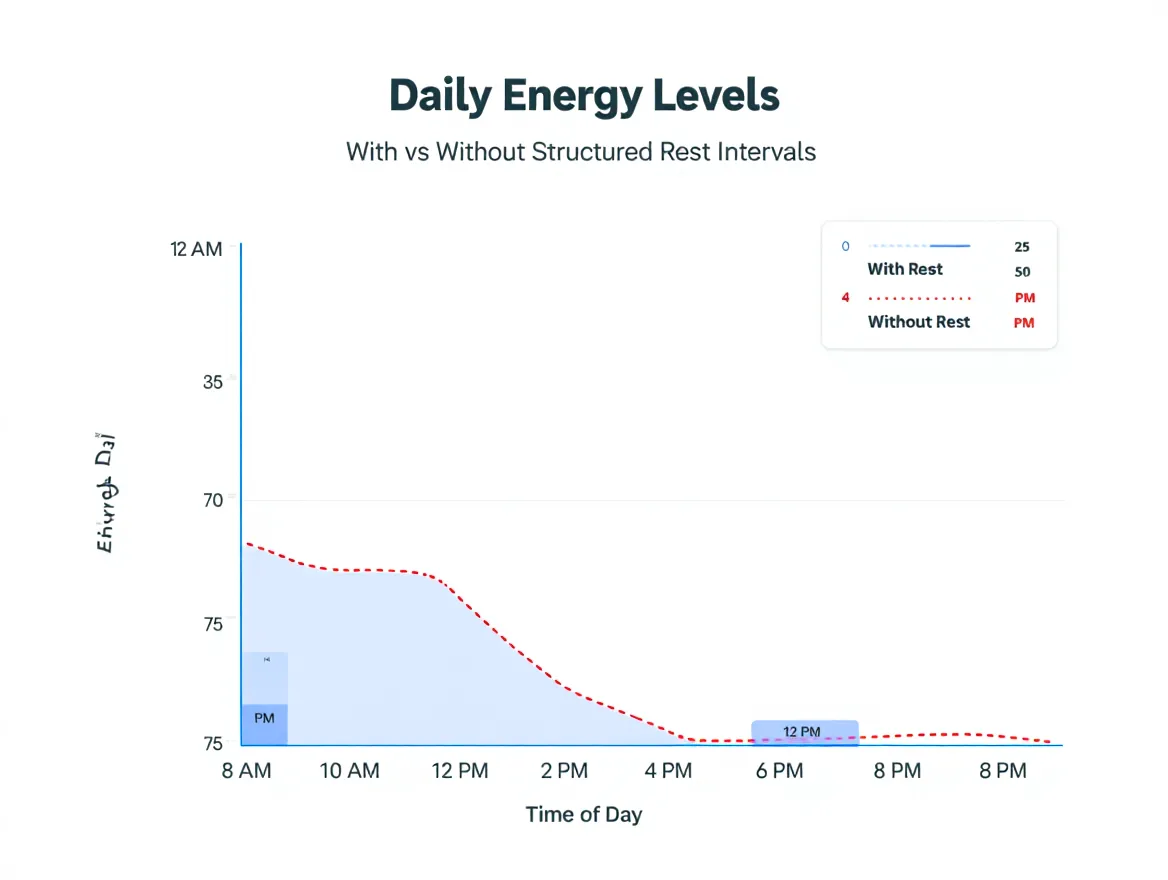
Energy availability follows circadian patterns. Aligning high-demand tasks with natural energy peaks, and rest with natural dips, supports efficiency.
Reducing visual, auditory, and information input gives the nervous system space to process accumulated stimuli and return to a neutral state.
Time away from social interaction and emotional demands allows for internal processing, reducing accumulated tension and supporting emotional equilibrium.
Numeric examples above are for general illustration and discussion; they are not cited as personal outcomes and may vary widely by person and context.
Application
Brief pauses between tasks create cognitive separation, reducing carryover fatigue from one activity to the next.
Scheduling lower-demand activities during the natural post-lunch energy dip aligns workload with biological rhythm.
Gradually reducing stimulation in the hours before sleep may support sleep onset and healthier sleep cycles for many adults.
Integrating rest into a daily schedule is not about adding idle time. It is about redistributing effort so that peak-demand periods are supported by preceding recovery, and high-output phases are followed by deliberate reduction.
This approach treats rest as a planning variable rather than a reaction to exhaustion. When rest is scheduled proactively, many people find that their capacity for sustained activity can improve.
Further Reading
Not all rest is the same. Understanding the different categories — physical, mental, sensory, emotional, social, and creative — helps in choosing the right form of recovery.
Read moreA closer look at the relationship between rest and daily functioning — how energy expenditure, cognitive load, and recovery duration interact.
Read more