Understanding Different Types of Rest

Rest is not a single state. It encompasses multiple forms of recovery, each addressing a different type of fatigue. Identifying which kind of rest is needed allows for more effective recovery and better-maintained daily activity.

Physical and Mental Rest

Physical rest includes both passive forms — such as sleep and stillness — and active forms like stretching or gentle movement. It addresses muscular fatigue and allows structural repair.

Mental rest targets cognitive depletion. When sustained concentration leads to slower processing and increased errors, stepping away from demanding tasks — even briefly — allows the mind to recalibrate.

Physical – Passive

Sleep, lying down, seated stillness. Minimal movement to allow muscular and systemic recovery.

Physical – Active

Gentle stretching, slow walking, restorative movement. Maintains circulation while reducing intensity.

Mental

Reduced cognitive demand. Avoiding complex decisions, lowering information intake, and allowing unstructured thought.

Sensory and Emotional Rest

Sensory Rest

Modern environments produce continuous sensory input — screens, sounds, notifications. Sensory rest involves intentionally reducing these inputs to allow the nervous system to process and discharge accumulated stimulation.

This may include periods of silence, reduced screen time, dimmed lighting, or time in low-stimulation environments.
Emotional Rest

Emotional rest means having the space to process internal states without external demands. It involves reducing the need to manage others' emotions and allowing honest expression of one's own state.

This form of rest is particularly relevant for those in roles that require sustained emotional engagement or empathy.

Social and Creative Rest

Social rest

Time spent alone or with people who require no performance. Social rest reduces the energy spent on maintaining conversational, professional, or social norms and allows natural behavior.

Creative rest

Exposure to environments, ideas, or experiences that replenish creative capacity without requiring output. Observing nature, engaging with art, or simply allowing the mind to wander without purpose.

Both social and creative rest are often overlooked because they do not match the common understanding of rest as physical inactivity. However, they address forms of depletion that physical rest alone cannot restore.

A person may be physically rested but socially fatigued, or mentally recovered but creatively depleted. Recognizing these distinctions supports more precise recovery.

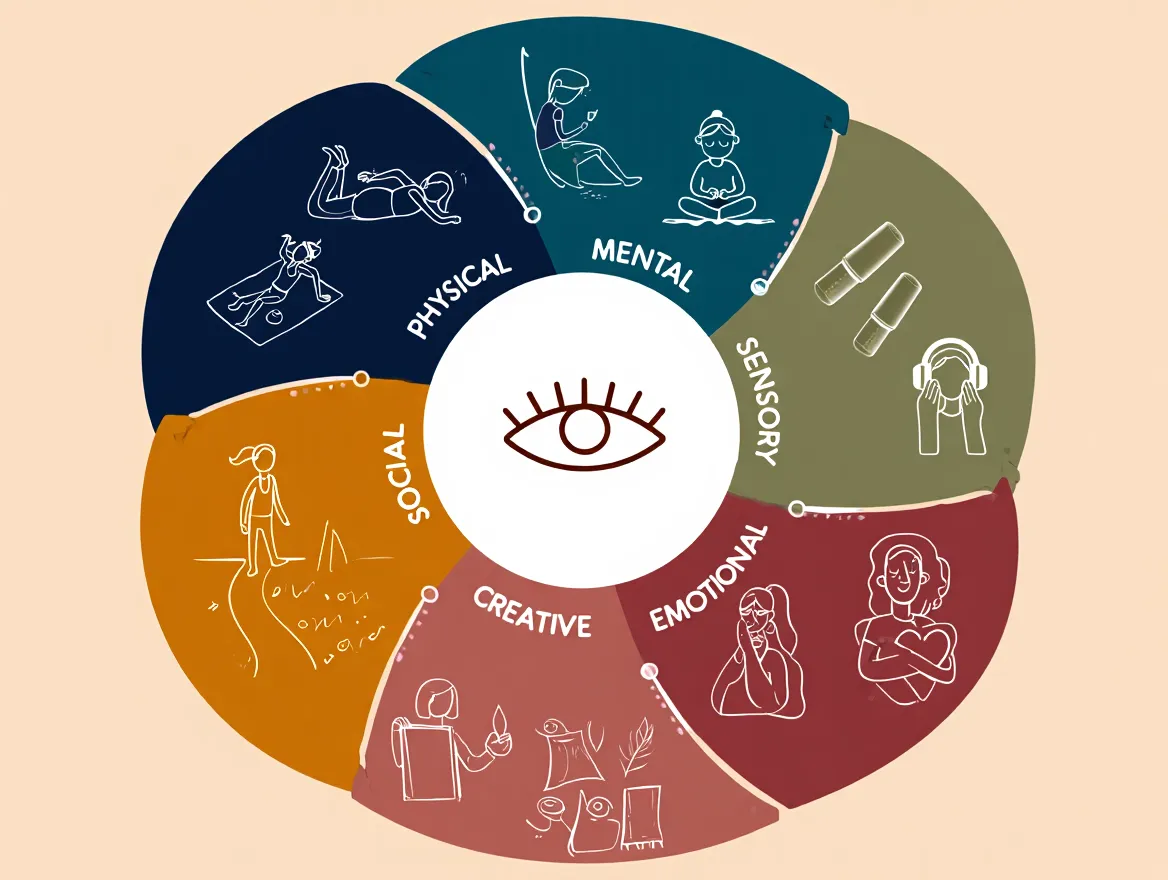
Map showing six types of rest — physical, mental, sensory, emotional, creative, and social — and their interconnections
Each type of rest addresses a specific category of fatigue within the daily activity cycle